Scans may indicate how Alzheimer’s moves through brain cells

Scans may indicate how Alzheimer’s moves through brain cells

Alzheimer’s and other types of dementia appear to spread through linked nerve cells in the brain, new research suggests. Scientists say the findings from MRI brain scans of people with dementia show it may be possible, with further research, to predict disease progression and monitor the impact of treatments.
Read the article >>

Alzheimer’s doesn’t just affect people considered old

About 200,000 individuals under 65 are among the 5.4 million Americans with Alzheimer’s disease. Experts suggest that number jumps to 500,000 when including younger people, some in their 30s, with other types of dementia. Still, some people are surprised when someone who isn’t elderly tells them about their Alzheimer’s diagnosis.
Read the article >>
Learn about younger-onset Alzheimer’s >>

Creative Gift Ideas for Seniors

http://www.csa.us/email/spirit/ssarticles/0312Lifestyle.html

The art of gift giving comes easily to some people. They just have a knack for choosing the right gift. How do they do it? Seniors can be especially tough to get a gift for because they already have accumulated a lifetime of stuff and appear not to need anything else or have room for anything else in their homes.

Adult children of seniors are often in a challenging gift-giving position. Adult children usually seek gifts that represent appreciation for their parents as well as a deeper understanding about their parents. Meaningful gift giving can be difficult to manage. To give a gift that is unique and shows thoughtfulness at the same time may take more than just a trip to the mall.

The creator of Zen Habits, Leo Babauta, explains that the general idea of showing appreciation for someone through gift giving is to “first identify what’s essential: that we show the person … how much we appreciate them. It’s not essential that the gift be big or expensive. No matter how small, the person will likely appreciate the gesture.” He continues, “The gift should also be appropriate to the person – if it’s personal, it’s likely to mean more. Take a moment to consider the person, what they like and the times you’ve spent together.” Some ideas he shares are:

  • A framed picture from an experience together
  • A photo album of special people or special memories
  • Favorite, homemade baked goods
  • A CD of favorite songs
  • An “I appreciate you because” jar filled will slips of paper, each with a reason that you appreciate that loved one
  • A book on the senior’s favorite topic or by their favorite author
  • A gift certificate to a favorite restaurant
  • A keepsake DVD with a video of special moments or a slideshow presentation of photos
  • A handmade piece of art such as a painting, drawing, piece of pottery or poem

A safe place to begin
A good start to finding a practical gift that that a senior would appreciate is to cover immediate needs of the senior first. The senior may be in need of something that will make their home more comfortable and even safer to live in. This could include installing grab bars in the bathroom, purchasing a higher toilet seat or adding a shower seat. Other useful items that can help a senior be more comfortable are an automatic can opener or a body pillow; both are small gifts that can make a world of difference. Gifts like these will show care for a senior loved one’s well-being, positively influence their daily lives and have a lasting impact.

Meaningful gifts from the whole family
A unique way of showing a senior that the whole family appreciates them is to engage participation from everyone in the family on one gift. These types of gifts take time to put together and coordinate, but the effort that all of the family members make will be touching and well worth the time and effort.

Gift ideas include:

  • Pick a day and volunteer at the senior’s favorite charity. Engaging with charity that means something to the senior and is the perfect way to support a cause that is close to their heart. Consider volunteering at a food bank sorting canned goods, working with children or serving meals at a food kitchen. Whether or not the senior can participate in the volunteer efforts, it is sure to touch them deeply.
  • Make the senior’s favorite dinner and hand-deliver it to their house. Many seniors are lonely, and dinner with a family member or friend is a wonderful gift. Think about doing this monthly as a “meal of the month” club. This is a fun reason to come together as a family, or each family member can rotate turns so that someone is making dinner and eating with the senior a couple of times a week.
  • Install Skype and a video camera on the senior’s computer. Seniors are easily connected to family and friends with Skype, a free video-chatting tool.
  • Create a list of the reasons why the family loves that senior. Ask all family members to write a few items and then compile a list on colorful paper and frame it. Create a list for a birthday and match the number of reasons to the birthday. For example, if the senior is turning 73, compile a list of “73 Reasons Why We Love Sherry.”

Loneliness brings opportunity
President and Chief Operating Officer (COO) Jeff Huber of Home Instead, Inc., franchisor of the Home Instead Senior Care® network of independently owned and operated franchise offices says, “Loneliness could be a big problem. So the most valuable gift that a senior could get would be that of companionship.”

Quality time is a gift that means so much to seniors. For seniors who are homebound, this is especially true, but even for seniors who are active and lead busy lives, time with loved ones can never be beat.

With the senior’s interests as the focus, create an opportunities to get together. If the senior doesn’t easily get out of the house, bring the fun to them. Bring the fixings for dinner over to the senior’s home and socialize while preparing the meal. Set the table with extra care – fine china, a tablecloth, candles, a beautiful centerpiece – to show that this is a special occasion.

An in-home movie night can be a lot of fun. Bring DVDs and some popcorn or treats and cozy up on the couch. If the senior would enjoy it, think about bringing classic movies instead of newly released movies. This can spur conversations about the senior’s past and generate good feelings about their lives.

For active seniors, play golf or take a trip to a favorite local or out of town destination. Seniors will appreciate time with their children, grandchildren and loved ones.

An invitation to do something together, especially something that the senior loves to do, shows value for that person. It is truly a gift that has meaning beyond measure.

While finding the right gift can be challenging, using some of the ideas mentioned here can help spark new ideas. When in doubt, think about the senior’s interests and daily experiences to guide gifting choices. A gift doesn’t have to be given only for a holiday or birthday. These types of gifts can be given at any time and on a regular basis, making the senior feel unexpectedly special.

The GPS Shoe for Wanderers

Source: gtxcorp.com

image

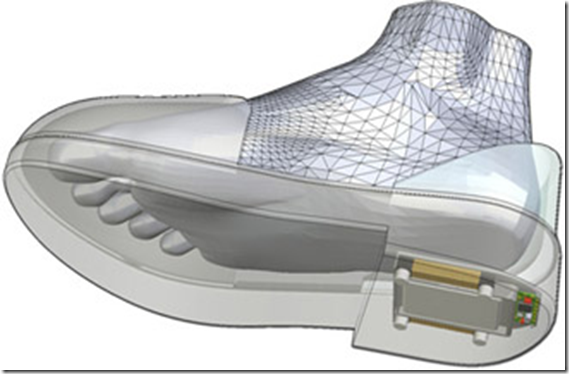
The term “track,” as it pertains to shoes, is no longer only associated with a “track and field” competition. The new trend in the shoe market is shoes that use a global positioning system (GPS) located in the heel of the shoe to actually track the location of a person. Originally developed for serious runners and misplaced children, these GPS shoes have found a promising market with seniors who have Alzheimer’s disease and other forms of dementia.

Of the 5.3 million Americans who endure Alzheimer’s, about 60 percent of seniors with Alzheimer’s will wander off at some point during their illness and 70 percent will wander more than one time. This behavior puts the senior’s safety and health at risk and gives families reason for concern. The senior may become dehydrated, could fall or may become seriously injured. Families and caregivers are in a challenging position when their senior loved one is a wanderer. A tool such as the GPS shoes can make caring for that loved one more manageable.

Seniors who wear the GPS-enhanced shoe can continue with their normal activities. While most GPS shoes resemble sneaker-style footwear for comfort and exercise, shoemakers are introducing new styles all the time. For instance, California based GTX Group is now making loafers and sandals to accommodate all walks of life.

The GPS technology is so small that it unnoticeably fits into the heel of the shoe. To work, the shoe’s GPS technology couples with a downloadable app for a computer and/or smart phone, or the device connects with a tracking service for a monthly fee.

Families of people with Alzheimer’s can easily track where their loved one is at at any given moment. A pre-set “safe zone” or “geo-fence” can be set on the app or with the tracking service. If the person wearing the GPS shoes meanders out of that area, the app sounds an alert or the tracking service sends a text message. Families or caregivers can locate the senior immediately and bring them back to a safe setting.

The GTX GPS Smart Shoe retails for more than $300 retail, and this high-tech footwear is available for purchase through Aetrex Worldwide, a company that specializes in pedorthic footwear, designed for optimal comfort.

“The GPS Shoe has the potential to be life-saving as well as life-changing technology for those afflicted and their caregivers,” said Andrew Carle, director of George Mason University’s Program in Senior Housing Administration and advisor to GTX Group. “The shoes also hold the potential to save governments hundreds of millions of dollars in search and rescue operations, as well as in health care costs for those otherwise injured.”

After Bill Johnston, an 83-year-old Alzheimer’s patient, had a wandering indicent, his family knew they needed to do something different before Bill was hurt.

“I had been leaving him at a McDonald’s and going to the grocery store nearby. I would say to him, ‘Ok, go in, drink your tea and wait for me, and I will come back.’ And he would do that,” Joan, Bill’s wife, explained. “But one time I spent a little longer in the grocery store and got back maybe 45 minutes later and I looked in McDonald’s and he wasn’t there. I opened the bathroom door and hollered ‘Bill,’ and no answer.”

Joan recalled, “I was looking all around the parking lots and the shopping center, across the street from McDonald’s I saw him. He was headed toward a major highway. He couldn’t remember when I would be back. When I wasn’t there, he said to himself, ‘Well where is she? I’ll just walk home.”

Seeking ways to control Bill’s wandering, Joan and her son, Alan, were led to George Mason University and Andrew Carle. Carle offered the Johnston’s a pair of GPS shoes to test.

Joan said the shoes gave her peace of mind. “When I lost him, you, you kind of panic.” she said.

“We discussed it, and we decided to try these shoes out on him.” said Alan, who takes care of the technological side of the GPS for his parents. “And we thought this would be a good match and kind of went from there.” “The shoes give you more control,” Alan Johnston said. “My mom can call me anytime, and I can give her immediate feedback on his location.”

Joan and Alan hope the GPS shoes will make life easier for them and safer for Bill.

About the development of the shoe, Carle said, “We’re trying to maximize the odds that wanderers are going to have this technology on them, and the best location is to put it in shoes.”

Other tracking devices include watches or bracelets with a GPS inside. However, it is easier for a person to forget to put those devices on before leaving the house. Shoes are more of a necessity, and most people don’t forget to slide their shoes on before going somewhere. This increases the chances that a person who wanders would be wearing the GPS device and therefore would be locatable.

The GPS technology in a pair of shoes can help bring peace of mind to families and caregivers while assuring a safer environment for seniors suffering from wandering behaviors.