
Look Who Is Turning 65

Look Who Is Turning 65

View the celebrities turning 65 in September.

Look Who’s Turning 65

Sept. 7—Chrissie Hynde

Chrissie Hynde

Best known as a founding member of the rock band the Pretenders, Chrissie Hynde has been the only constant member of the band throughout its history. “I saw her play in Central Park [when the Pretenders played in August 1980],” Madonna recalled. “She was amazing: the only woman I’d seen in performance where I thought, Yeah, she’s awesome! . . . It gave me courage, inspiration, to see a woman with that kind of confidence in a man’s world.”

Born in Akron, Ohio in 1973, Hynde later moved to London, where she landed a position at the music magazine NME and got to know Johnny Rotten and Sid Vicious (of the Sex Pistols). In the midst of the early punk movement, she joined several short-lived bands. In 1978, Hynde started putting together a band with Pete Farndon (bass guitar, vocals), James Honeyman-Scott (guitar, vocals, keyboards) and Martin Chambers (drums, vocals, percussion). The name Pretenders was inspired by the Sam Cooke version of the Platters’ 1955 R&B song “The Great Pretender.”

They recorded a demo tape (including “Precious,” “The Wait” and a Kinks cover, “Stop Your Sobbing”), produced a single (“Stop Your Sobbing”/”The Wait”) and performed their first gigs in a club in Paris. The single was released in January 1979 and hit the Top 30 in the U.K. Later that spring (1979), the Pretenders recorded their eponymous first album and hit the charts in the U.K. and U.S. with the song “Brass in Pocket.” The band released an EP album, titled Extended Play, then Pretenders II later in the summer, which included “Talk of the Town” and “Message of Love.”

Hynde has also released numerous hits with other musicians, including Frank Sinatra, UB40, Sheryl Crow and Emmylou Harris. In 2005, the Pretenders were inducted into the Rock and Roll Hall of Fame in Cleveland, Ohio. In 2014, Hynde released a new album, Stockholm, featuring contributions from Neil Young and John McEnroe. In 2015, she published an autobiography, Reckless: My Life as a Pretender. Hynde is also an animal rights activist and a supporter of PETA and the animal rights group Viva! She lives in London and also has an apartment in the Northside Lofts in her hometown of Akron.


Sept. 5—Michael Keaton
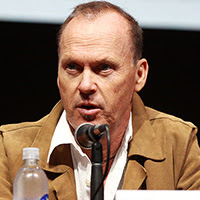
Michael Keaton photo by Gage Skidmore

The actor, comedian, producer and director first rose to fame for his comedic film roles in Night Shift (1982), Mr. Mom (1983), Johnny Dangerously(1984) and Beetlejuice (1988), and he earned further acclaim for his dramatic portrayal of the title character in Tim Burton’s Batman (1989) andBatman Returns (1992). Keaton’s critically praised lead performance in Birdman (2014) earned him several awards. Keaton first appeared on TV in Pittsburgh public television programs, includingMister Rogers’ Neighborhood (1975). After moving to Los Angeles, he appeared in various popular TV shows, including Maude and The Mary Tyler Moore Hour. Around this time, Keaton adopted a stage name to avoid confusion with well-known actor Michael Douglas and daytime host Mike Douglas. He chose Keaton because of an affinity for the physical comedy of Buster Keaton. He showed off his comedic talents with James Belushi in the short-lived comedy series Working Stiffs, which led to a co-starring role in the comedy Night Shift, directed by Ron Howard. His role as the fast-talking schemer Bill “Blaze” Blazejowski earned Keaton critical acclaim, and he scored leads in the subsequent comedy hits Mr. Mom, Johnny Dangerously and Gung Ho.

His title character in Tim Burton’s 1988 horror-comedy Beetlejuice earned Keaton widespread acclaim and boosted him to movieland’s A-list. Keaton’s career was given another major boost when he was again cast by Tim Burton, this time as the title comic book superhero of 1989’s Batman. Keaton’s dramatic performance earned widespread acclaim from critics and audiences alike, and Batman became one of the most successful films of the year. During the 1990s, Keaton appeared in a wide range of films, includingPacific Heights, The Paper and twice in the same role as Elmore Leonard character Agent Ray Nicolette, in Jackie Brown and Out of Sight. In the early 2000s, Keaton appeared in several films with mixed success, including Live From Baghdad (for which he was nominated for a Golden Globe award), First Daughter, White Noise and Herbie: Fully Loaded. While he continued to receive good notices from the critics (particularly for Jackie Brown), he was not able to revive the box-office success of Batman until the release of Disney/Pixar’s Cars(2006), in which he voiced Chick Hicks.

For his role in the 2007 TV miniseries The Company, Keaton received a 2008 SAG nomination for Outstanding Performance. He provided the voice of Ken in Toy Story 3 (2010), which received overwhelmingly positive acclaim and grossed over $1 billion worldwide, making it one of the most financially successful films ever. In 2014, Keaton starred in Birdman as a screen actor famous for playing the iconic titular superhero, who tries to regain his former glory. For his portrayal, he won the Golden Globe Award for Best Actor in a Musical or Comedy and received an Academy Award nomination for Best Actor. In the 1980s, Keaton bought a ranch near Big Timber, Montana, where he spends much of his time.


Sept. 20—Guy Lafleur
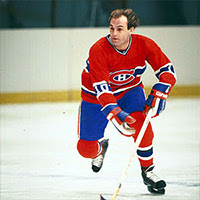
Guy Lafleur

The Canadian former professional ice hockey player was the first player in the National Hockey League (NHL) to score 50 goals and 100 points in six straight seasons. Between 1971 and 1991, he played for the Montreal Canadiens, New York Rangers and Quebec Nordiques in an NHL career spanning 17 seasons, and five Stanley Cup championships (all five with the Canadiens). Lafleur started playing hockey at the age of 5 after receiving his first hockey stick as a Christmas present. In his teens, Lafleur gained considerable recognition for his play as a member of the Quebec Remparts of the Quebec Major Junior Hockey League, where he led his team to the Memorial Cup in 1971, scoring 130 regular season goals. He was a cornerstone of five Stanley Cup championship teams. He was one of the most popular players on a very popular team; fans chanted “Guy, Guy, Guy!” whenever he touched the puck. He became known among English fans as “Flower” due to the literal translation of his surname, while among French fans he was dubbed “le Démon Blond” (the Blond Demon).

When the Canadiens’ dynasty came to an end in 1979 and injuries shortened Lafleur’s 1980–1981 season, he decided to retire. After being inducted into the Hockey Hall of Fame, he came out of retirement to return to the NHL for three more seasons, from 1988 through 1991, with the New York Rangers and the Quebec Nordiques. Due to a grandfather clause, Lafleur remained one of the few players who did not wear protective helmets. He is the all-time leading scorer in Canadiens history, notching 1,246 points (518 goals and 728 assists) in his 14 years with the Habs. He led the NHL in points in 1976, 1977 and 1978. Lafleur was also the fastest player (at the time) to reach 1,000 points, doing so in only 720 games. In 1988 Lafleur was inducted into the Hockey Hall of Fame. In 1998, he was ranked No. 11 on The Hockey News’ list of the 100 Greatest Hockey Players. Lafleur currently operates a helicopter rental company in Montreal that shuttles VIPs to and from the airport.


Sept. 25—Mark Hamill

Mark Hamill photo by Gage Skidmore

The actor is best known for his portrayal of Luke Skywalker in the Star Wars film series. Released in May 1977, Star Wars was an enormous unexpected success and made a huge impact on the film industry. Hamill also appeared in the Star Wars Holiday Special in 1978 and later starred in the successful sequels The Empire Strikes Back andReturn of the Jedi. For both of the sequels, he was honored with the Saturn Award for Best Actor given by the Academy of Science Fiction, Fantasy and Horror Films. In 2015, Hamill appeared in Star Wars: The Force Awakens and will continue to star in the new trilogy, alongside fellow Star Warsactors Harrison Ford and Carrie Fisher.

After the success of Star Wars, Hamill appeared on teen magazine covers. To avoid typecasting, he appeared in the 1978 film Corvette Summer and the better known 1980 World War II film The Big Red One. To further distance himself from his early blockbuster role, Hamill started acting on Broadway, starring in plays such as The Elephant Man in 1979, Amadeus in 1983 and Harrigan ‘N Hart in 1985 (for which he received a Drama Desk Award nomination). After a six-year hiatus, Hamill returned to film with the 1989 science fiction film Slipstream and continued to star in films throughout the 1990s, including the thriller Midnight Ride and The Guyver in 1991. When the Wing Commander series of computer games started using full motion video cut scenes, he was cast as the series protagonist. He also directed and starred in the 2004 direct-to-DVD Comic Book: The Movie, which won an award for Best Live-Action DVD Premiere Movie at the 2005 DVD Exclusive Awards.

Hamill has gained a reputation as a prolific voice actor. Though the voice role he is most known for is Batman’s archenemy, the Joker, his success as the Joker has led him to portray a wide variety of characters in television, film, anime and video games (mostly similar super-villains). Hamill was the voice of The Hobgoblin in the 1990s Spider-Mananimated series, as well as in other Marvel superhero genre roles. Non-comic related television roles include Dr. Jak in Phantom 2040, Christopher “Maverick” Blair in Wing Commander Academy and Buzz Buzzard in The New Woody Woodpecker Show. In animated films, he has voiced roles in Sinbad: Beyond the Veil of Mists, Joseph: King of Dreams andFuturama: Bender’s Big Score. Notable video game voice roles include those in Gabriel Knight: Sins of the Fathers, Soldier of Fortune II: Double Helix and the LucasArts gameFull Throttle.

http://www.optimumseniorcare.com/services/alzheimerscare.php

http://optimumseniorcare.com/blog/

https://www.facebook.com/OptimumseniorcareIL

Protesting for the Right to Sit

Protesting for the Right to Sit

A 3-day festival featuring 1970s rock stars bans blankets and chairs. Will baby boomers stand up for their rights?

A 3-day festival featuring 1970s rock stars bans blankets and chairs. Will baby boomers stand up for their rights?

When a concert promoter sold tickets to an October 2016 music festival aimed at baby boomers, it promised customers that they could bring their own seating. The Desert Trip festival’s stars include Bob Dylan (who just turned 75), Paul McCartney (73), the Rolling Stones (Mick Jagger and Keith Richards, both 72), The Who (Roger Daltrey is 72 and Pete Townshend 71) and Neil Young (only 70). After customers paid $424 each for tickets to the 3-day Desert Trip, in Indio, Calif., they received notice that neither blankets nor chairs would be allowed. For those with creaky knees, aching backs and/or sore feet, this festival wouldn’t be any Woodstock.

Writing on Alternet, author Peter Dreier has called the no-seating policy a form of age discrimination and is urging baby boomers to protest by staging a sit-in, a popular type of protest from the 1970s, at the home of Jay Marciano, chairman of concert promoter AEG Live.

Although AEG Live later announced it would refund money to those who didn’t want to stand for three days, it wouldn’t back down on its ban on chairs. Will baby boomers take this latest affront sitting down? Will those who protested the Vietnam War and demonstrated for civil rights now stand up for their right to sit?

http://www.optimumseniorcare.com/services/alzheimerscare.php

http://optimumseniorcare.com/blog/

https://www.facebook.com/OptimumseniorcareIL

Use Your Smartphone to Pay at the Store

Tech 101

Use Your Smartphone to Pay at the Store

Storing credit cards on your phone is safer, experts say, than in your wallet, which can be lost or stolen.

Storing credit cards on your phone is safer, experts say, than in your wallet, which can be lost or stolen.

Most of us grew up writing checks to make purchases, which can be a laborious task when you’re standing at the checkout counter writing in longhand (and then noting the transaction in the checkbook), and feel especially stressed if there’s a long line behind you.

When debit and credit cards replaced the checkbook for most retail transactions, it was a welcome and efficient step. But a new technology could make using debit and credit cards as antiquated as a checkbook. Mobile wallets or payments, as they are known, let you tap or wave your smartphone at a credit card terminal to make a purchase at your favorite store or restaurant.

You start by loading your credit and debit card accounts onto your phone, so they are stored on your phone instead of in your wallet. At the checkout counter, you verify your identity with either a fingerprint or pass code, choose the credit card you want to use and waltz out of the store with your purchase.

Amazingly, this new technology—in the form of Apple Pay, Android Pay or Samsung Pay—is touted as being more secure than physical credit or debit cards. Transactions use near-field communication (NFC) wireless connectivity, and the connection’s short range makes the transaction an unlikely target for hackers. On top of that, mobile payments have several security layers that make this option far safer than using a traditional credit or debit card that can be stolen or the information swiped by a store clerk or waiter.

A forerunner of the mobile-payment trend is Starbucks. Its mobile app lets you load money onto a Starbucks digital gift card, pay for items with your smartphone and accumulate rewards for free food or drinks. You can even use the app to order your mocha latte before you get to the store, so it’s ready when you arrive.

Not all merchants are set up to accept mobile payments, so check first to make sure. Your phone must also have an NFC chip, so your older phone may not be able to make mobile payments.

Apple Pay

One of the earlier and influential movers in the field of mobile wallets, Apple Pay can be used on iPhones, iPads and Apple Watches. To make a purchase, hold your Apple device near the reader with your finger on the Touch ID. Or, double-click the Home button when your device is locked to access Wallet.

Your card number is never stored on your device, and when you pay your debit or credit card, numbers are never sent to merchants. Apple Pay assigns a unique number to each purchase, so your payments stay private and secure. To make the transaction even more secure, if you lose your iPhone or iPad, you can put your device in Lost Mode (using the Find My iPhone app) to suspend Apple Pay, or you can wipe your device completely clean. You can also stop payments from your credit and debit cards by logging into iCloud.com.

Android Pay

Unlike Apple Pay, Google’s version of a mobile wallet doesn’t use fingerprints to authenticate your identity, but accepts a PIN code, password or pattern. To complete a transaction, tap your phone on the payment terminal and enter your pass code. Like Apple Pay, Android Pay uses “tokenization,” which replaces your payment cards’ real numbers with alternative numbers that are used just for that transaction. So, your credit card information is secure in case of a data breach.

Samsung Pay

Unlike Apple and Android Pay, you can use Samsung Pay at any checkout terminal that has a magnetic-stripe credit card reader because it’s not limited to NFC. Samsung Pay uses a technology that mimics the credit card swipe. This means you can use it almost anywhere. However, you must have service with a participating wireless carrier, including AT&T, Sprint, T-Mobile or Verizon Wireless.

Like the other two options, Samsung Pay uses encrypted software to hide your card numbers. To launch the app, swipe your phone, secure the transaction with your fingerprint or enter your pin, and hover your phone over the card reader to pay.

PayPal

Although not a phone, PayPal lets you access your credit and bank accounts without needing to use a credit or debit card. PayPal customers can make purchases at credit card terminals using their phone number and a PIN code. Like its online transactions and like Apple, Android and Samsung Pay, in-store purchases using PayPal are tokenized and encrypted.

PayPal has recently added an app for Apple, Android and Windows that lets you store loyalty cards (like those used at grocery stores) on your phone. With the new app, you can order ahead from a restaurant that partners with PayPal and pay with your phone, so when you arrive, all you need to do is pick up your pizza and get it home while it’s hot.

Not all stores have signed up for the PayPal partnership, so make sure you check for participating locations on your app.


Sources

10 Ways to Pay with Your Mobile Phone,” March 31, 2016, Fueled.com.

Easier Ways to Make Payments With Smartphones,” July 30, 2014, New York Times.

New Ways to Pay With Your Phone,” February 2016, Kiplinger.

Can a phone replace your wallet? I went shopping to find out,” December 16, 2014, c/net.

Why Mobile Wallets are Safer than Physical Wallets,” July 27, 2015, Capterra .

Are mobile wallets safe?,” Feb. 24, 2016, KLS.com.

Blog posting provided by Society of Certified Senior Advisors
www.csa.us


http://www.optimumseniorcare.com/services/alzheimerscare.php

http://optimumseniorcare.com/blog/

https://www.facebook.com/OptimumseniorcareIL

Early Diagnosis for Dementia Can Be Helpful

Early Diagnosis for Dementia Can Be Helpful

Watch for signs of dementia in your loved one, so together you can plan for the future before the condition worsens.

Watch for signs of dementia in your loved one, so together you can plan for the future before the condition worsens.

Someone you love—your parent, your spouse, a good friend—is showing signs of dementia: forgetting more often, being confused or perhaps exhibiting uncharacteristic behavior. You’re worried it could be Alzheimer’s or some other form of dementia, but because you know that nothing can be done, you keep quiet, hoping you’re wrong.

Benefits of Early Diagnosis

Yet discovering dementia early can be helpful for several reasons:

  • You can reverse some cognitive problems that mimic dementia, such as depression or a vitamin B12 deficiency.
  • Although there is no cure, Alzheimer’s medications can temporarily slow symptoms, improve quality of life and prolong independence, which also helps the patient’s caregivers.
  • Slowing dementia’s symptoms with medication could reduce healthcare costs by delaying going into a nursing home. This also allows time to make decisions about future care and receive the patient’s input. However, waiting too long can cause problems because many facilities won’t accept those with severe dementia, at which point the family must scramble to find a place and may have to settle for an option that is inconvenient or doesn’t have the quality of care desired.
  • Government or nonprofit agencies can provide support for the patient and caregiver. Services might include financial help and emotional counseling for both the patient and caregiver.
  • The individual with dementia can have conversations with loved ones about what kind of treatment they want. They can fill out financial, legal and health advance directives before losing the ability to communicate. Without these directives, families often face wrenching decisions about their loved one’s care, such as what to do when the person can no longer eat or drink. If these conversations are put off too long, family members may have to go to court to take control of their loved one’s affairs, a costly and difficult process.
  • Enrolling in palliative care can ease the effects of dementia. This specialized medical care provides relief from the symptoms and stress of a serious illness. Unlike hospice, palliative care is available at any stage of illness and can be combined with curative treatment. (For more on palliative care, see sidebar.)

Signs of Dementia

Palliative Care for Dementia Patients

Those with dementia face problems different than those with a physical disease, such as cancer. Because they often can’t express their feelings, dementia patients may be undertreated for pain. At the same time, they may receive interventions, such as forced food or drink, which might not be appropriate or helpful. Palliative care focuses on making sure the patient is comfortable, rather than trying to heal them.

A team of doctors, nurses, social workers and other specialists work together to improve quality of life for the patient, the family and caregiver, whether a spouse or family member. Statistics show that those taking care of loved ones with dementia have a much higher risk of getting sick themselves—even dying—compared to those not offering such care.

Many private insurance companies and health maintenance organizations offer palliative care benefits, while Medicare Part B offers some benefits. Medicaid’s hospice and palliative care coverage for people with limited incomes varies by state.

To help your loved one and yourself, watch for these indications of dementia. Dementia is a collective term, not a disease, that describes various symptoms of cognitive decline, such as memory loss. Alzheimer’s is the most common type of dementia, accounting for 60 to 80 percent of cases. Vascular dementia, which occurs after a stroke, is the second most common type.

Memory loss. As we age, it is common to not remember as well as we once did. But those with dementia forget the names of people close to them or major life events, like retiring or taking a big vacation. Not only can they forget what something is called but also its purpose. They may ask repeatedly for information or tell the same story over and over. People with dementia often get lost, unable to find their way to the grocery store or the retirement community’s dining hall. They misplace items or put them in inappropriate places, like storing a plate in the bathroom closet. They forget to pay bills.

Lapse in judgment. Those with dementia can make poor decisions, like donating money to every nonprofit organization that contacts them. The person might dress strangely, wearing warm clothes in summer, for example, or not shower or bathe. They forget what is appropriate, so they may barge into someone else’s house or apartment without knocking. Commonly, they lose inhibitions about sexual behavior, such as making inappropriate comments or exposing themselves.

Personality change. A sociable person can become withdrawn, or someone who is shy may suddenly start to do embarrassing acts, like removing her clothes in public. People with dementia often become more depressed, scared or anxious, and some become paranoid, certain that the caregiver is stealing. Moods can change swiftly, from calm to anger and back.

Difficulty with language. The person uses the wrong word for something familiar, like calling a garbage can a coffee maker. They might refer to the post office as “that place you take the mail.” Or they can’t find the word at all, so they stop joining the conversation or trail off in the middle of talking, as if they’ve lost their thought. Similarly, they have a harder time comprehending conversations and may need to have something explained repeatedly before they understand.

Tasks become difficult. Chores and activities that have been easy are suddenly challenging for people with dementia. The basics of cooking are now out of reach, washing clothes can be a stretch, and planning a big Thanksgiving dinner is impossible. Money management, especially, eludes them, so they don’t pay bills or correctly balance their checking account. Playing the person’s favorite game is no longer possible because they can’t remember the basic rules.

Other possible signs of dementia are changes in vision, so the person has a hard time reading; not knowing the time or date; and loss of motor functions, so walking becomes more difficult.


Sources

10 Early Signs of Alzheimer’s,” WebMD.

Importance of an early diagnosis,” Alzheimer’s and Dementia Alliance of Wisconsin.

Forget me not: palliative care for people with dementia,” June 2007, Postgraduate Medical Journal, U.S. National Library of Medicine.

Dementia and Palliative Care,” Get Palliative Care.

Dementia – Symptoms,” WebMD.

11 Early Signs of Dementia,” Everyday Health.

What are early signs and symptoms of dementia?” eMedicineHealth.

Blog posting provided by Society of Certified Senior Advisors
www.csa.us

http://www.optimumseniorcare.com/services/alzheimerscare.php

http://optimumseniorcare.com/blog/

https://www.facebook.com/OptimumseniorcareIL

Best Vitamins, Minerals for Older Adults

Best Vitamins, Minerals for Older Adults

A good diet is the best way to get nutrients, but sometimes you can’t get enough through food.

A good diet is the best way to get nutrients, but sometimes you can’t get enough through food.

Many of us have a daily regimen of vitamins and mineral supplements, often because we’ve read how a certain vitamin, for example, can boost our immune system. Yet studies have shown that eating the right diet is more beneficial than taking a supplement. Many foods also have fiber and other substances that provide health benefits. In addition, you may be wasting your money on expensive supplements that are not helping you, may interfere with prescribed medication therapies or could be harmful because certain supplements can be dangerous in large doses.

However, some people, such as strict vegetarians and vegans, may never be able to get enough of certain vitamins, such as vitamin B, in their diets. As we get older, we need to ensure that we are getting adequate nutrients, and diet alone may not be enough. Older adults might need supplements because our bodies become less able to absorb key nutrients. Some seniors cook less (or never learned how, in the case of widowers), plus we lose our sense of taste, or some foods become difficult to chew or digest. So we don’t eat as much.

For older adults, several vitamins and minerals are essential, whether you get them from your diet or from supplements. Check with your healthcare practitioner to know which ones are right for you.

B Vitamins

Vitamin B12 is important for creating red blood cells and DNA, and for maintaining healthy nerve function. Older adults can’t absorb it from food as well as younger people. In addition, commonly prescribed heartburn drugs, such as proton-pump inhibitors (for example, brand names Nexium or Prilosec), reduce acid production in the stomach, and acid is needed to absorb vitamin B12.

Vegetarians or vegans will not get enough B12 in their diet because it’s present only in animal products. Stomach stapling or other forms of weight-loss surgery interfere with the body’s ability to extract vitamin B12 from food.

Although many claims have been made that vitamin B12 prevents Alzheimer’s disease, heart disease and other chronic conditions, there is no evidence of this.

The National Academy of Sciences (NAS) recommends you get 2.4 micrograms (mcg) of vitamin B12 every day. You’ll find this vitamin in fortified cereals, meat, fish, poultry, eggs and milk.

Another B vitamin, B6, helps form red blood cells. NAS recommends 1.7 milligrams (mg) every day for men and 1.5 mg for women. You can get vitamin B6 from potatoes, bananas, fortified cereals, whole grains, organ meats (like liver) and fortified soy-based meat substitutes.

Too little folic acid/folate leads to anemia. NAS recommends 400 mcg each day for both men and women. You can get this essential B vitamin from dark-green leafy vegetables (like spinach), beans, peas, and oranges and orange juice. Also, many breakfast cereals are fortified with folate.

Vitamin D

Because it is mainly produced by sunlight, vitamin D is generally deficient in those who do not get outside. As we get older, we may spend more time indoors, especially in inclement weather, and our skin is less able to synthesize vitamin D. This vitamin helps the body absorb calcium, maintain bone density and prevent osteoporosis, and may also protect against some chronic diseases, including cancer, Type 1 diabetes, rheumatoid arthritis, multiple sclerosis and autoimmune diseases. In older people, vitamin D deficiency has also been linked to an increased risk of falling.

The NAS recommends at least 600 international units (IU) for people age 50-70 and 800 IU for those 70 and above. However, you should never take more than 4,000 IU. You can get vitamin D from fatty fish (such as salmon or tuna), fish liver oils, eggs, fortified milk and milk products, and fortified cereals.

Potassium

This mineral, which carries a slight electrical charge, is helpful with nerve impulses and is needed for all sorts of functions, including keeping your heart beating and your muscles working. Seniors who are taking diuretics, also called water pills, to control hypertension and congestive heart failure may lose too much potassium as they urinate. Too little potassium, which is an electrolyte, can result over time in fatigue, weakness of the muscles, headaches and changes in bowel habit.

The daily recommended dosage is 4,700 mg, although many older Americans don’t get enough potassium, according to surveys. You can find potassium mainly in fruits and vegetables, particularly bananas, prunes, plums and potatoes with their skin. Too much potassium also can be dangerous, so consult with your health care provider to be sure potassium levels are neither too high nor too low when taking diuretics.

Magnesium

As we age, we are less able to absorb magnesium, which can help prevent heart disease, diabetes and certain cancers, as well as osteoporosis. Some medications, such as diuretics, may also reduce magnesium absorption. The recommended daily dosage for women over 30 is 320 mg, and for men is 420 mg, but too much magnesium can be toxic.

Good sources of magnesium are fresh fruits, vegetables, nuts, whole grains, beans and seeds.

Calcium

Because calcium is so important for building and maintaining strong bones, it’s crucial that older adults get enough of this mineral. Too little will increase the risk of brittle bones and fractures. Post-menopausal women, especially, lose the ability to absorb calcium.

The National Institutes of Health (NIH) recommend 1,000 mg for men 51-70 years of age and 1,200 mg for women. Both sexes over 70 should take 1,200 mg, but not more than 2,000 mg a day. There are several types of calcium supplements. Calcium citrate and calcium carbonate tend to be the least expensive.

Calcium-rich food sources include milk and milk products, some forms of tofu, dark-green leafy vegetables (like collard greens and kale), broccoli, soybeans, canned sardines and salmon with bones, and calcium-fortified foods.

Controversial Supplements

Two other supplements get mixed reviews.

Are Supplements Safe?

Consumer Lab tested 38 multivitamins and found defects in one-third of them (“Defects Found in 33% of Multis Put to the Test,” July 27, 2016). Results showed 14 multivitamins contained either too little (as low as 8 percent) or too much (as high as 226 percent) of claimed amounts of vitamin A, vitamin C, folate or calcium. A range of multivitamins contained more than the upper tolerable limits of niacin, vitamin A, folate and magnesium. Interestingly, the test found that some of the best vitamins were also the cheapest. The more expensive products weren’t any better than those that cost less.

The problem is that the government does not regulate supplements, as it does medicine, to make sure they are safe or effective, because the U.S. Food and Drug Administration (FDA) labels supplements as food, not medicine. So, just because you see a dietary supplement on a store shelf does not mean it is safe, that it does what the label says it will or that it contains what the label says it contains. The FDA only gets involved when it receives complaints about a product.

Larger pharmacies, where product turnover is high, may be preferable over smaller pharmacies, because medications have an optimal period of time before losing their potency. In any case, make sure to check expiration dates before purchasing.

A few private groups, such as the U.S. Pharmacopeia (USP), NSF International, ConsumerLab.com and the Natural Products Association, have their own seals of approval for dietary supplements. To get such a seal, products must be made by following good manufacturing procedures, must contain what is listed on the label and must not have harmful levels of ingredients that don’t belong there, like lead. To be sure that the supplement you are buying is safe, check for the seals on the product. Or you can go to the NSF’s website to the see the list of supplements certified by the organization.

Multivitamins

While there is not sufficient evidence to support a recommendation for or against the use of multivitamin and mineral supplements, taking a daily multivitamin can help some people get the recommended amounts of vitamins and minerals, especially in situations when they cannot or do not obtain them from food alone. But taking a multivitamin can also raise the chances of getting too much of some nutrients, like iron, vitamin A, zinc, niacin and folic acid, especially when a person takes more than a basic, once-daily product that provides 100 percent of the daily value of nutrients.

Keep in mind that there is no standard or regulatory definition for multivitamins—or any dietary supplement. No agency regulates which nutrients they must contain or at what levels. (See sidebar, “Are Supplements Safe?”) Manufacturers choose which vitamins, minerals and other ingredients, as well as the amounts, to include in their products. If you decide to take a multivitamin, read the label to make sure you are getting the vitamins and minerals you need and in the right dosages for your age. Avoid supplements with mega-doses.

Omega-3

While some research suggests that a diet high in omega-3 fatty acids can protect brain health, a large clinical trial by researchers at NIH found that omega-3 supplements did not slow cognitive decline in older persons. However, these unsaturated fats have been shown to reduce symptoms in rheumatoid arthritis and slow the progression of age-related macular degeneration.

Instead of taking supplements, eat at least two servings of fish a week, especially salmon, tuna, sardines and mackerel. Omega-3 vegetable sources include soybeans, walnuts, flaxseed and canola oil.

When using supplements, remember to keep them away from heat, which breaks down their effectiveness. This is especially relevant when taking a car trip and you’ve stashed your vitamins in the car. Similarly, medications should not be stored above the stove.

http://www.optimumseniorcare.com/services/alzheimerscare.php

http://optimumseniorcare.com/blog/

https://www.facebook.com/OptimumseniorcareIL